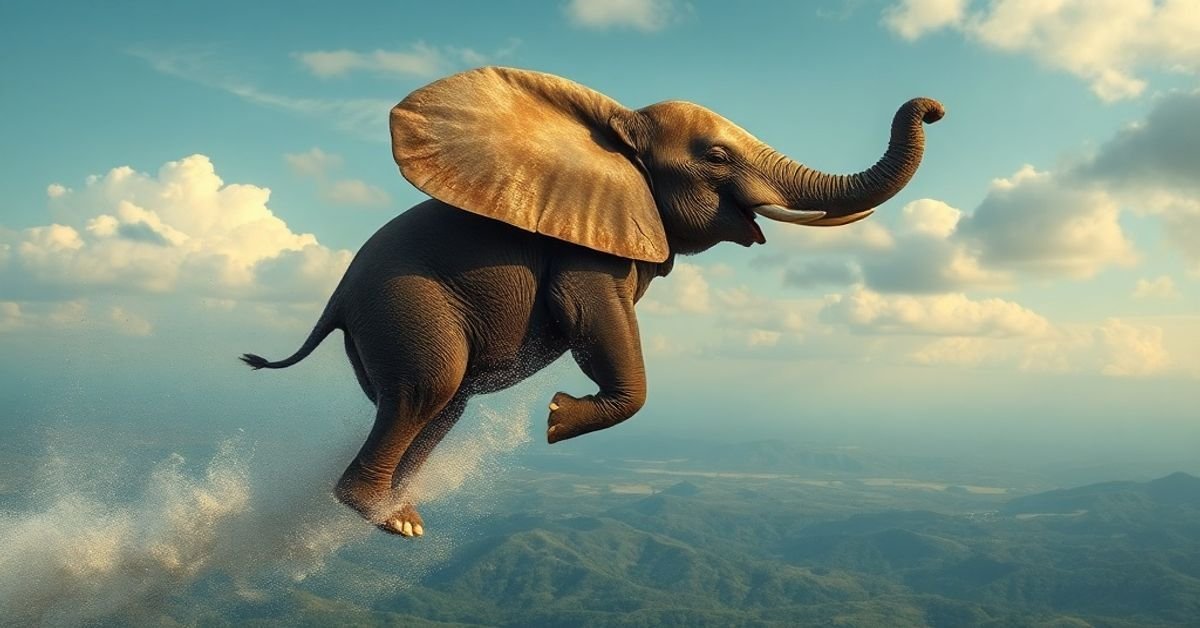
Rain lashed the stadium roof as the final whistle blew. On the podium, gold medal around his neck, the champion stared not at the crowd but at a small, worn figurine in his palm — a flying elephant, wings outstretched, chipped at the edge. That moment captured the essence of the flying elephant memoirs of an Olympic champion: not just a tale of victory, but of myth, memory, and the weight of legacy. What began as a childhood symbol of impossible dreams became the narrative spine of a life lived at the edge of human endurance.
Origins of a Myth: The Flying Elephant Symbol
The flying elephant wasn’t born in a lab or a legend — it was carved from soapstone by the champion’s grandfather during a monsoon in rural Kenya. “Elephants don’t fly,” he said, “but dreams do.” That object, passed down through generations, became more than a keepsake. It represented defiance of physical limits and cultural expectations. In the flying elephant memoirs of an Olympic champion, this symbol evolves from a child’s fantasy into a psychological anchor during grueling training cycles. The memoir reveals how athletes often cling to personal totems — not for superstition, but for cognitive continuity under pressure. Research from the National Institutes of Health supports the role of symbolic objects in enhancing focus and resilience in elite performers. This isn’t folklore; it’s neuroscience dressed in myth.
- Personal symbols improve mental consistency in high-stakes environments
- Childhood artifacts often resurface during career-defining moments
- Cultural narratives shape athletic identity as much as physical training
Training, Trauma, and the Weight of Gold
Behind every Olympic podium is a trail of broken bodies and silenced doubts. The memoir doesn’t shy from the cost: torn ligaments, sleepless nights, and the quiet erosion of self-worth when medals don’t come. What sets the flying elephant memoirs of an Olympic champion apart is its refusal to glorify suffering. Instead, it frames pain as data — a signal to adapt, not endure. The champion recounts a pivotal injury before the 2016 Games, when doctors advised retirement. It was the flying elephant, placed on his nightstand, that reminded him: progress isn’t linear. Recovery became a ritual — not of denial, but of recommitment. This aligns with modern sports psychology, which emphasizes mental recovery as critical as physical rehab. The memoir challenges the “no pain, no gain” dogma, advocating for intelligent resilience over brute force.
- Injury as a catalyst for strategic evolution, not defeat
- The role of ritual in maintaining psychological stability
- Why champions often fail before they succeed
Beyond the Podium: Life After Gold
Most sports biographies end at the medal ceremony. This one begins there. The memoir’s most powerful section explores identity collapse post-victory — the silence after the roar, the emptiness of achieved dreams. The flying elephant, once a motivator, now feels like a relic. The champion describes months of disorientation, questioning whether the sacrifice was worth it. It’s a rare admission in a genre obsessed with triumph. Yet, it’s this honesty that makes the flying elephant memoirs of an Olympic champion essential reading. It reframes success not as an endpoint, but as a transition. The champion eventually founded a youth mentorship program, using the elephant as a symbol of aspirational thinking. For readers, it’s a reminder that legacy isn’t built in stadiums — it’s built in choices made long after the lights fade.
Explore more Olympic champion stories that redefine what it means to win.